 |
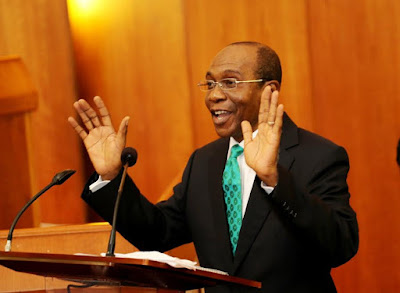
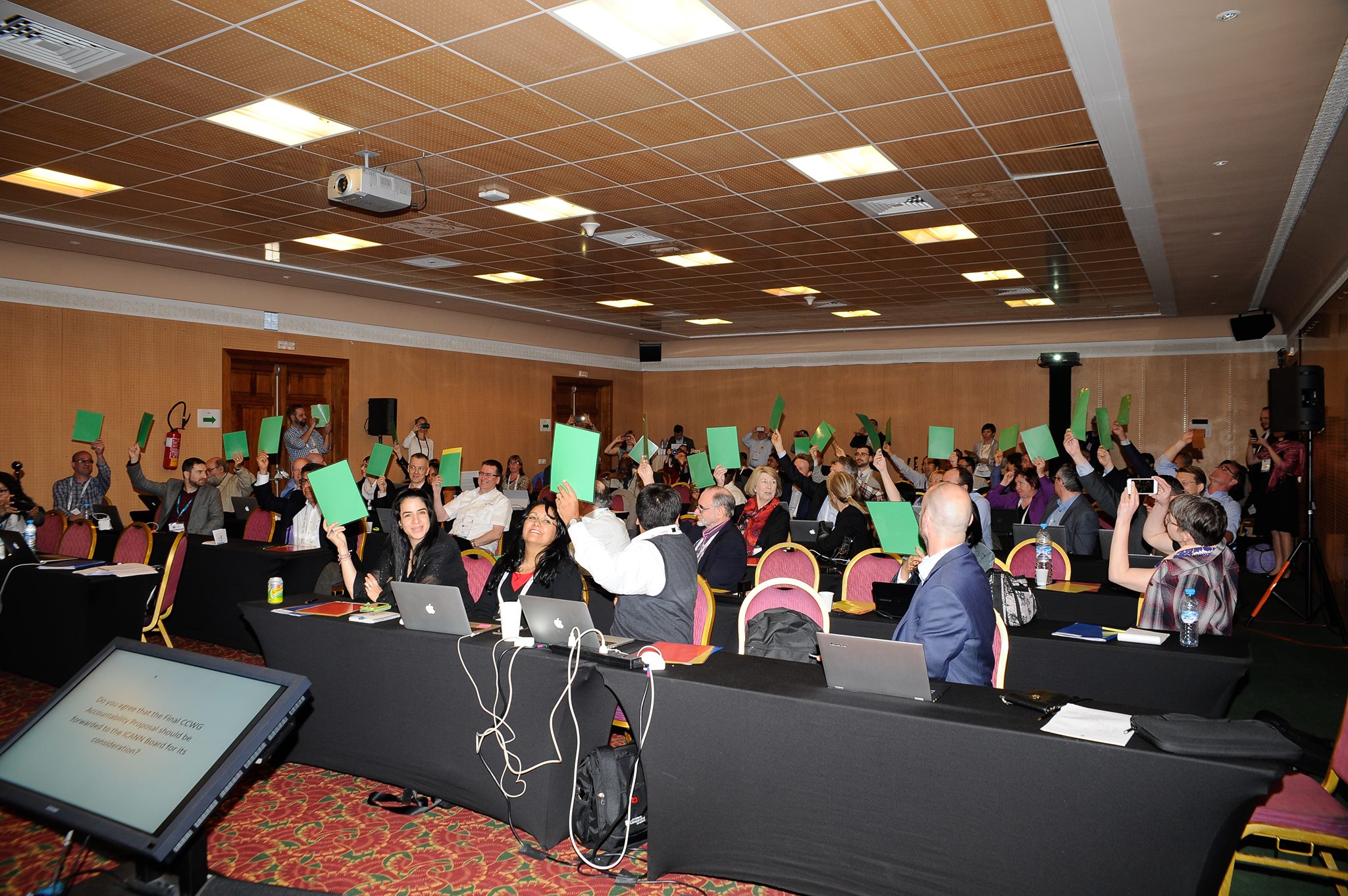
| ''Multi Stakeholders turn the globe green. The power of common interest will give way to a community driven value with the use of the internet. What a better way to unite the world through ICANN. One World. One Internet.'' -Akinbo Adebunmi |
As activities to prepare for the expiration of the contract on Sept. 30 are ramping up, so too is the rhetoric from those who oppose it. As the President and CEO of the Internet Society, I find this rhetoric both inaccurate and unsettling.
In a few short weeks, the last vestige of direct U.S. government involvement in the governance of the Internet’s technical operations will come to an end. On Sept. 30, a contract will expire between the U.S. Commerce Department’s National Telecommunication and Information Administration (NTIA) and the Internet Corporation for Assigned Names and Numbers (ICANN), the California-based non-profit responsible for managing some of the Internet’s technical operations. As a result, the long awaited transition of NTIA’s oversight role of the Internet Assigned Numbers Authority (IANA) functions will transfer to the global Internet community.
For the past two years, the Internet Society – an organization created by the founders of the Internet that now boasts more than 90,000 members worldwide – has been actively involved in the development of the proposal that identifies what that oversight will look like, and who will be involved. The result, a multistakeholder body made up of the various organizations and individuals that help maintain and grow the Internet, is a remarkable example of how the global community can come together to keep it open and accessible to all.
Some may try to make us believe that by transitioning the oversight of the IANA functions to the global multistakeholder community, we risk having authoritarian regimes take control of the Internet via an intergovernmental body such as the United Nations.
This is just wrong and is a mischaracterization of what the transition really means.
Since ICANN was created in 1998, the Internet’s growth has been nothing short of staggering. Nearly half of the world’s population – 3.5 billion people – is online (including 90 per cent of Americans). The Internet has revolutionized nearly every aspect of our lives.
No single entity or country is responsible for this massive expansion of the Internet. In fact, it has been the cooperation of a diverse set of global stakeholders – the technical community, businesses, civil society, and governments that has ensured that the Internet is the vehicle of empowerment, opportunity and innovation we know today. The Internet community’s proposal reflects and builds on this collaborative spirit.
Let’s be clear about what we’re talking about. The most discussed IANA function consists of a directory system that maps names that humans understand such as those we use in website addresses and email addresses (like internetsociety.org or info@isoc.org) to a set of numbers that computers understand (the Internet Protocol address). That system, in the simplest of terms, it is the roadmap for the Internet, and the role of the U.S. Government has historically held has been one of a clerical nature ensuring that changes to one part of that directory are accurate. You can see the directories that are the focus of the "transition" at IANA.org.
The IANA transition is about the technical coordination of the naming, numbering and protocol system. It is a function governments and other Internet stakeholders have long agreed is best left to the Internet’s technical community. In fact, I would argue that there is no one able to run these functions other than the technical community.
Moreover, since the Internet’s inception, there has been global agreement that no government or intergovernmental group should control it. The Governmental Advisory Committee (GAC), the entity under the ICANN umbrella that represents governments’ interests, supports the IANA transition. They agree that the management of the Internet includes multistakeholder processes like those employed at ICANN and other fora. It’s important to note that 150 governments of every political stripe from around the world, including the United States, are active participants in the GAC.
The Internet is a technical marvel. Every day, more than 200 billion emails are sent, 140,000+ websites are created, 500 million tweets are posted, and countless new users from around the world come online. The Internet contributes trillions of dollars to the global economy every year, and it has revolutionized how we work and communicate. It is, without question, one of the greatest accomplishments of the human race. Its success is a testament to the genius of its design.
We built the Internet right, and it has proven itself to be stable, resilient and secure.
There simply is no reason for the NTIA to have a hands-on role in the core technical functions of the Internet any longer. Since 1998, the U.S. government has been steadily removing itself from the management of Internet resources.
Now, nearly 20 years and numerous administrations later, the time has come to remove the last vestige of direct U.S. government involvement. A broad community of stakeholders, the technical community in the U.S. and around the world in particular, agree. The transition must not be delayed over inaccurate rhetoric.
--------------------------------------------------
Kathryn Brown is president and CEO of the Internet Society.